By the Design Team at Elegante Interiors | 14 Years Combined Experience | Last Updated: June 2025
Why This Question Feels So Confusing
If you’ve been trying to figure out the 2BHK interior cost in Bangalore, you’ve probably noticed something strange. Every designer gives you a completely different number. One quote feels unbelievably cheap. Another feels like you’re being asked to furnish a luxury villa instead of a two-bedroom apartment.
The confusion isn’t accidental. Interior pricing in Bangalore isn’t standardized, and most quotes hide more than they reveal. What most homeowners really want isn’t just a number — they want to understand why the number changes so much.
In my experience working with interior projects and analyzing real budgets across Bangalore, there’s a pattern behind all this chaos. Once you understand that pattern, pricing stops feeling random and starts becoming predictable.
This article is built to give you exactly that clarity.

What Does a 2BHK Interior Actually Cost in Bangalore?
Let’s get straight to the point.
A typical 2BHK interior design cost in Bangalore usually falls somewhere between ₹4 lakh and ₹12 lakh. That’s a wide range, and it’s the reason most people feel lost.
But here’s what matters more than the range itself — where you fall inside it.
If your home is around 900–1100 sq ft and you’re going for a clean, practical setup without overdesigning every corner, you’ll most likely land in the ₹5–8 lakh bracket. That’s where the majority of real projects sit.
The higher-end numbers usually come into play when you start adding premium finishes, heavy customization, or brand-driven materials. The lower-end numbers, on the other hand, often involve compromises in durability, finish, or execution quality.
So the real question isn’t “what’s the cost?” — it’s “what kind of home are you trying to build?”
A Real 2BHK Interior Case Study from Bangalore
To make this tangible, let’s look at an actual project.
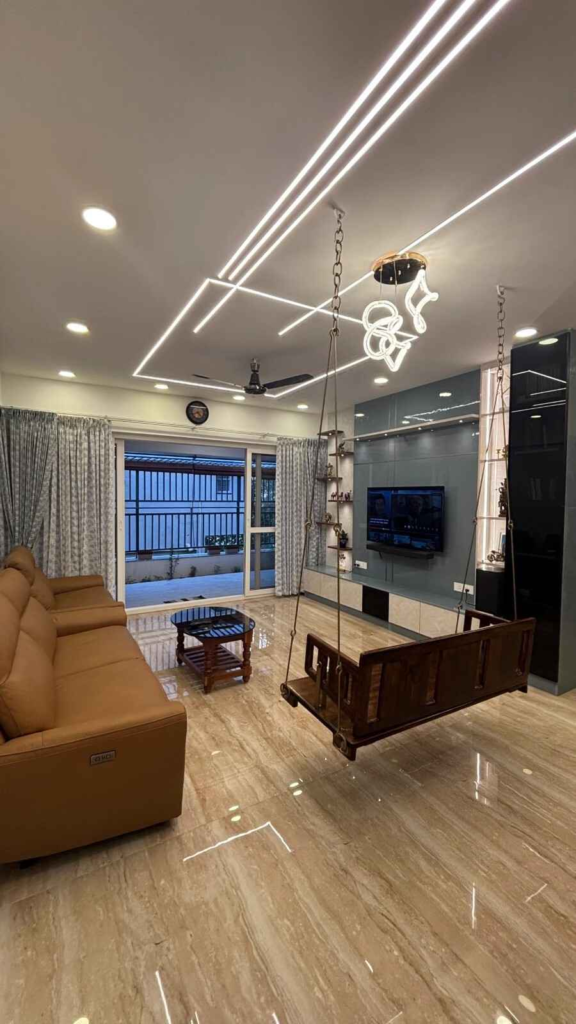
This was a 2BHK apartment in Whitefield, roughly 1050 sq ft. The homeowners wanted a modern, functional setup — nothing flashy, but definitely not basic either. The goal was to create a home that looked clean, felt premium enough, and would last for years without constant repairs.
The final cost came to ₹6.8 lakh.
What’s interesting isn’t the number itself, but how that money was distributed.
A significant portion went into the modular kitchen and wardrobes. That’s something most people underestimate until they see the breakdown. The kitchen alone crossed ₹1.4 lakh, while wardrobes across two bedrooms touched around ₹2 lakh.
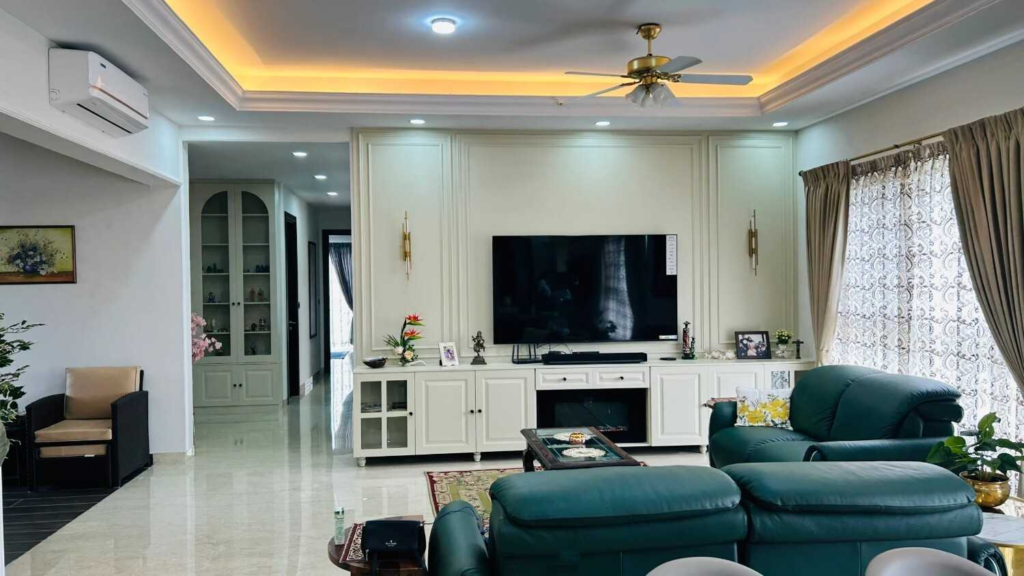
The living room, including the TV unit and some minimal storage, stayed under ₹1 lakh. Ceiling work and lighting added another ₹70,000, and painting with a few design elements came close to ₹50,000. Furniture — which included a bed, sofa, and dining setup — took roughly ₹1.1 lakh.
What this shows very clearly is that interiors are not evenly distributed costs. Certain elements dominate the budget, while others remain secondary.
Once you understand this, you stop wasting money in the wrong places.
Where Does the Money Actually Go?
If you strip away all the marketing language and look at interiors from a practical lens, most of your budget flows into three core areas: storage, functionality, and finish.
Storage is the biggest one. Wardrobes and kitchen units alone can consume more than half your total spend. These are not just visual elements — they define how your home works daily. The more customized and material-heavy they get, the more expensive your project becomes.
Functionality comes next. This includes fittings, hardware, lighting, and layout adjustments. These are often invisible when the project is done, but they quietly determine whether your home feels comfortable or frustrating to use.
Then comes finish. This is where aesthetics come in — laminates, paints, textures, panels. This layer is what people notice first, but interestingly, it’s not always the most expensive unless you deliberately push for premium materials.
What most homeowners get wrong is prioritizing finish over structure. They spend on how things look before ensuring how things work.
That’s where budgets start slipping.
Modular vs Carpenter Work: What Actually Makes Sense?
This debate comes up in almost every interior project in Bangalore.
At a surface level, carpenter work feels cheaper. And in some cases, it genuinely is. You might save 10–20% upfront. But cost isn’t just about what you pay today — it’s about what you end up paying over time.
Modular interiors come from factory setups. That means better precision, faster timelines, and more predictable outcomes. You know what you’re getting before installation even begins. For homeowners who want clarity and speed, this matters a lot.
Carpenter work, on the other hand, is highly dependent on the individual executing it. A skilled carpenter can deliver great results. But inconsistency is common, and delays are almost expected.
From what I’ve seen across projects, the decision usually comes down to budget and tolerance for uncertainty. If you’re operating under ₹5 lakh and willing to manage the process closely, carpenter work can make sense. Once you cross that range, modular starts becoming a safer and often smarter investment.

The Hidden Costs No One Talks About
One of the biggest reasons interior budgets go out of control isn’t bad planning — it’s incomplete planning.
There are always costs that don’t show up in the initial quote.
Electrical adjustments are a common one. Once design starts, you realize switches need to move, new lighting points are required, or wiring needs an upgrade. Plumbing changes can also creep in, especially in kitchens and bathrooms.
Then there’s logistics — delivery, installation, and coordination delays. These don’t always appear as line items, but they affect your overall spend.
And finally, taxes. Many homeowners forget to factor in GST properly, which can significantly increase the final bill.
A safe rule is to always keep a 10–15% buffer beyond your planned budget. Not because things will go wrong, but because interiors are rarely linear.
How to Reduce Cost Without Ruining the Outcome
Cutting cost doesn’t mean compromising the entire project. It just means making smarter decisions about where to spend and where to hold back.
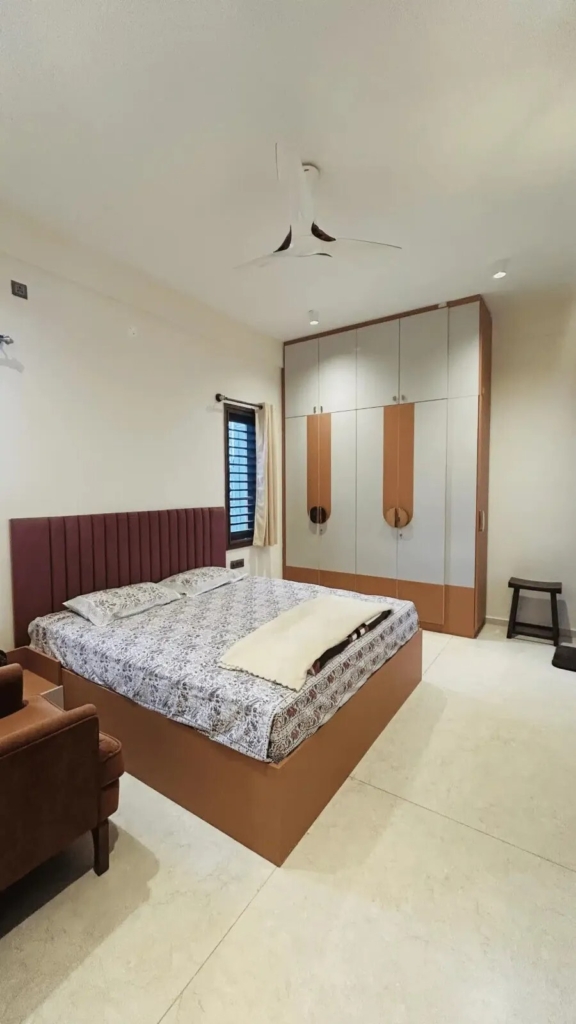
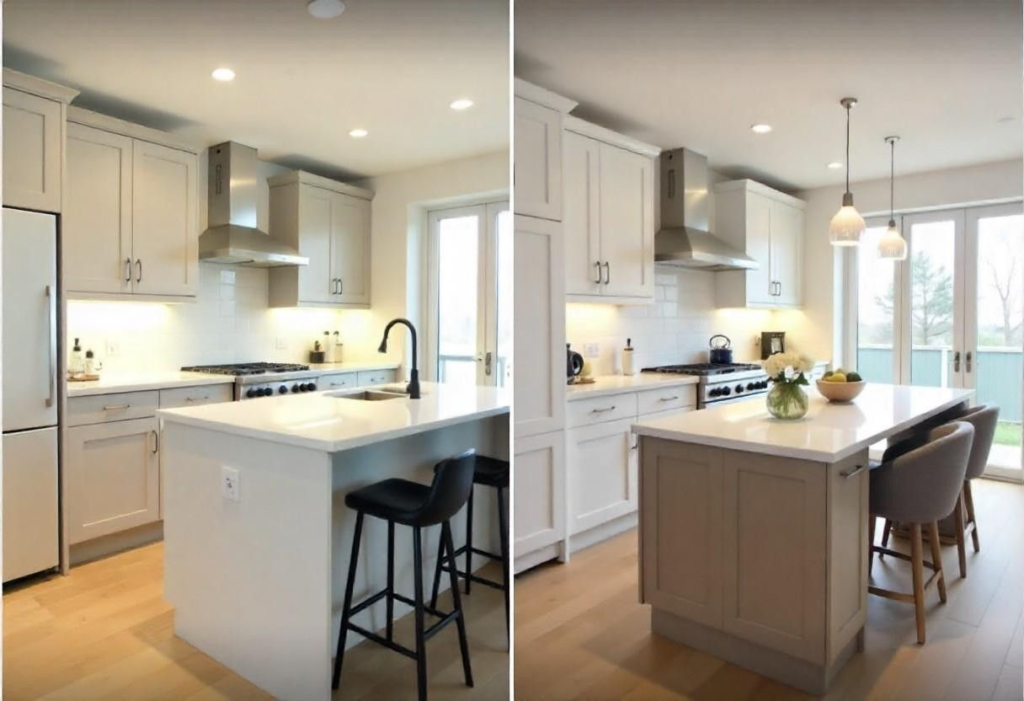
In most Bangalore homes, the smartest approach is to invest in the kitchen and wardrobes first. These are long-term elements that are expensive to redo later. Once they’re done right, the rest of the home can evolve gradually.
Materials also make a big difference. Laminates, for example, offer a clean finish at a much lower cost compared to acrylic or veneer. The visual difference is often subtle, but the price gap is not.
Furniture is another area where flexibility helps. Not everything needs to be custom-built. Mixing ready-made pieces with custom interiors can bring costs down significantly without affecting the overall look.
What matters is consistency, not extravagance.
So, What Should You Budget?
After all the breakdowns and explanations, it helps to come back to a simple number.
If you’re planning a 2BHK interior in Bangalore and want a balanced, well-executed home, budgeting around ₹6–8 lakh is a practical starting point. This range allows you to cover essentials properly without constantly cutting corners.
If you go lower, you’ll need to make trade-offs. If you go higher, you’re likely moving into premium territory with better materials and more customization.
The key is not chasing the lowest quote, but understanding what your budget actually gets you.
Final Thought
Interiors are not just about design. They’re about decisions.
The more clarity you have before starting, the less you’ll regret later. And in a city like Bangalore, where options are endless and pricing varies wildly, clarity is your biggest advantage.
Once you understand where the money goes, the entire process becomes far less stressful — and a lot more predictable.
FAQs
Frequently Asked Questions
What is the average 2BHK interior cost in Bangalore?
Most homes fall between ₹5 lakh and ₹8 lakh, depending on materials and customization.
Why do interior design quotes vary so much?
Because materials, scope, and execution methods differ significantly across vendors.
Is modular interior worth the cost?
For most mid-range budgets, modular interiors offer better consistency and faster completion.
How can I reduce my interior budget?
Focus on essential elements like kitchen and wardrobes, and avoid over-customization.
Are hidden costs common in interior projects?
Yes, especially in electrical work, plumbing, logistics, and taxes. Keeping a buffer helps manage this.
Schedule Your Free Design Consultation today and discover how professional expertise can elevate your celebration from beautiful to absolutely breathtaking. With Navratri just days away, secure your slot now and join hundreds of satisfied Bangalore families who trust Elegante Interiors for their most important celebrations.
📞 Contact us for a free consultation or visit eleganteinterior.com to explore our portfolio!